CTV's high CPMs and tangled supply chains make it a prime target — and IVT rates more than double when SSAI is in the mix. Valid clicks convert at roughly 2x the rate of fraudulent ones, so the real cost goes far beyond wasted spend. Here's what the latest data shows and how to fight back.
CTV ad fraud is the manipulation of connected-TV ad delivery and measurement to generate revenue from fake or misrepresented impressions. Because CTV CPMs are high and supply paths are complex, fraudsters spoof devices and apps, hijack server-side ad insertion (SSAI) sessions, recycle impressions, and mask sources to siphon spend. Industry bodies have been tightening guardrails, but IVT on CTV is still a real risk for marketers scaling video. IAB Tech Lab’s standards like app-ads.txt, sellers.json, and the SupplyChain Object help expose who is actually selling inventory on CTV apps, yet enforcement and adoption vary by partner and platform.
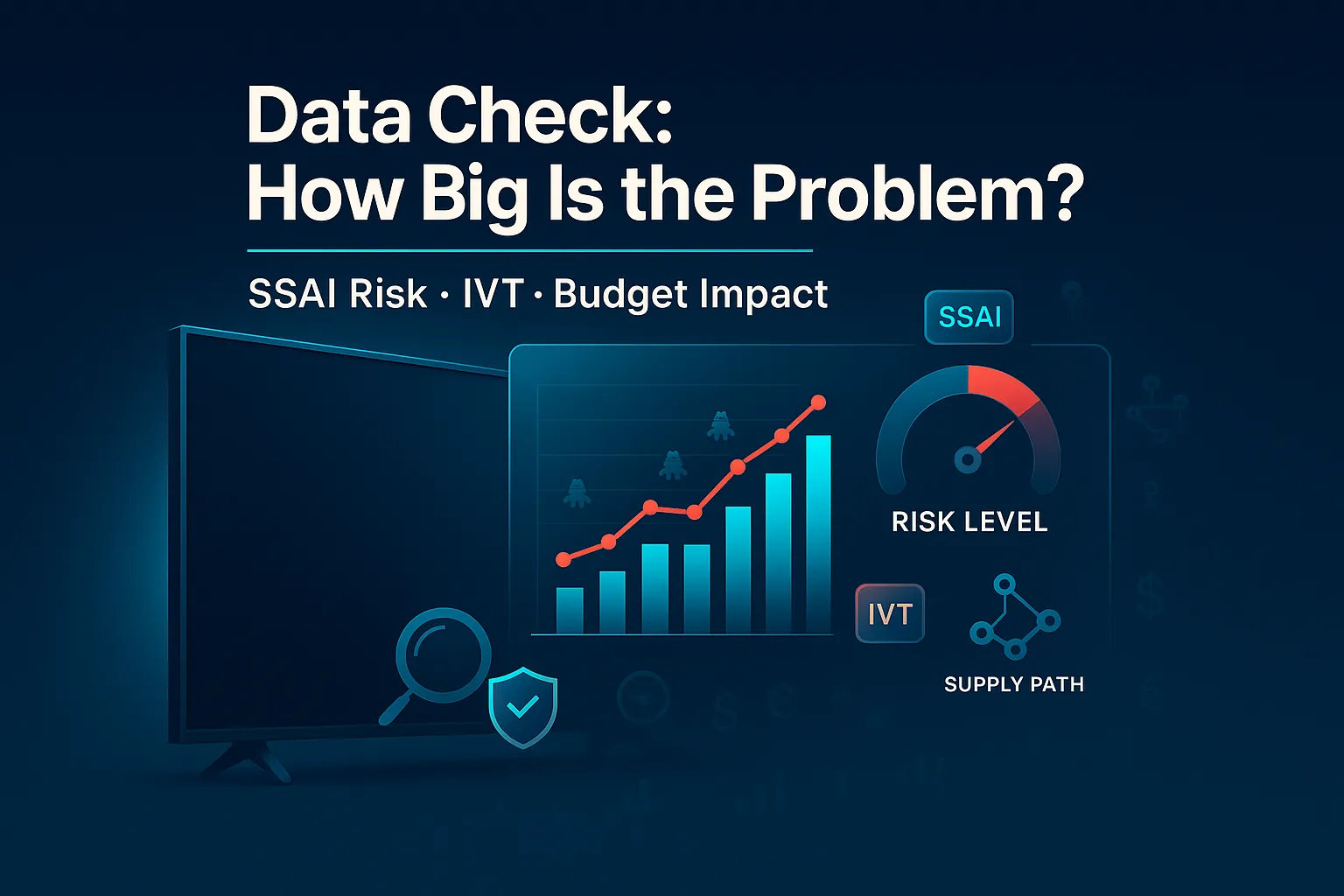
According to Spider AF's 2025 Ad Fraud White Paper, average ad fraud across web performance media reached 5.1% in 2024, with some networks topping 46.9% and up to 51.8% of a single company’s budget impacted before mitigation. The study also shows conversion rates from valid clicks are roughly 2x higher than from invalid traffic, underscoring how fraud distorts ROI and optimization.
What makes CTV distinct is SSAI’s role. Independent research has found IVT rates more than double when SSAI is in the programmatic supply chain, and SSAI is used widely across CTV app stores. That does not mean SSAI equals fraud, but it does raise risk if buyers lack verification and path transparency.
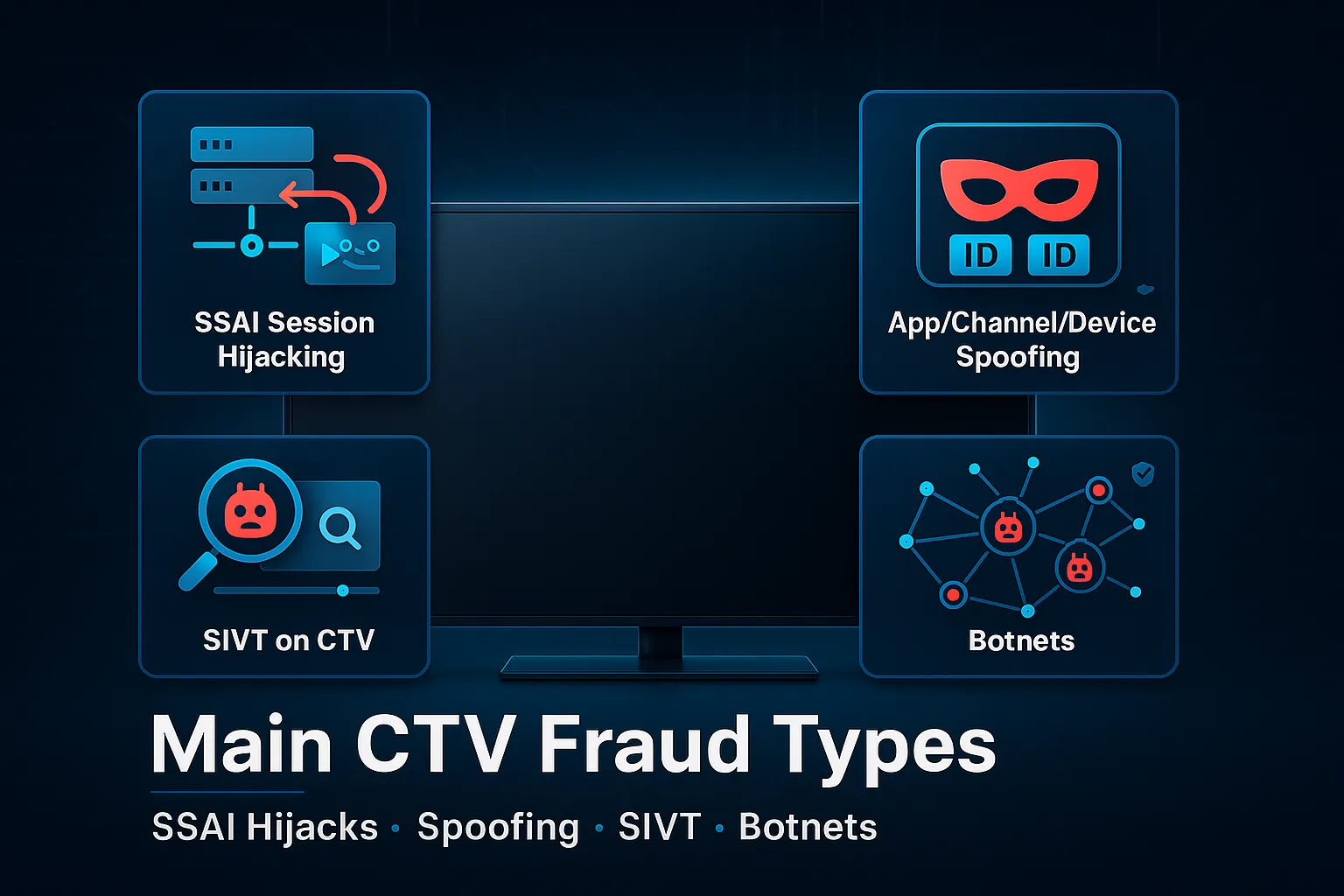
Fraud schemes can join real viewing sessions and insert unauthorized ad calls, or fake sessions entirely. DoubleVerify documented “SneakyTerra,” an SSAI scheme that spoofed millions of devices a day at its peak.
Bots or misconfigured servers claim to be premium CTV apps or devices, inflating supply and diverting spend away from real publishers. IAB Tech Lab’s app-ads.txt and sellers.json mitigate this by listing authorized sellers and surfacing the chain of custody.
Measurement firms continue to earn third-party accreditation for filtering SIVT in CTV, which helps buyers trust verification signals. In April 2024, IAS received MRC accreditation for CTV SIVT filtration.
From earlier CTV-focused botnets like ICEBUCKET to other cross-environment operations, takedowns show adversaries adapt quickly to new signals. Use them as reminders to monitor continuously rather than proof the problem is “solved.”
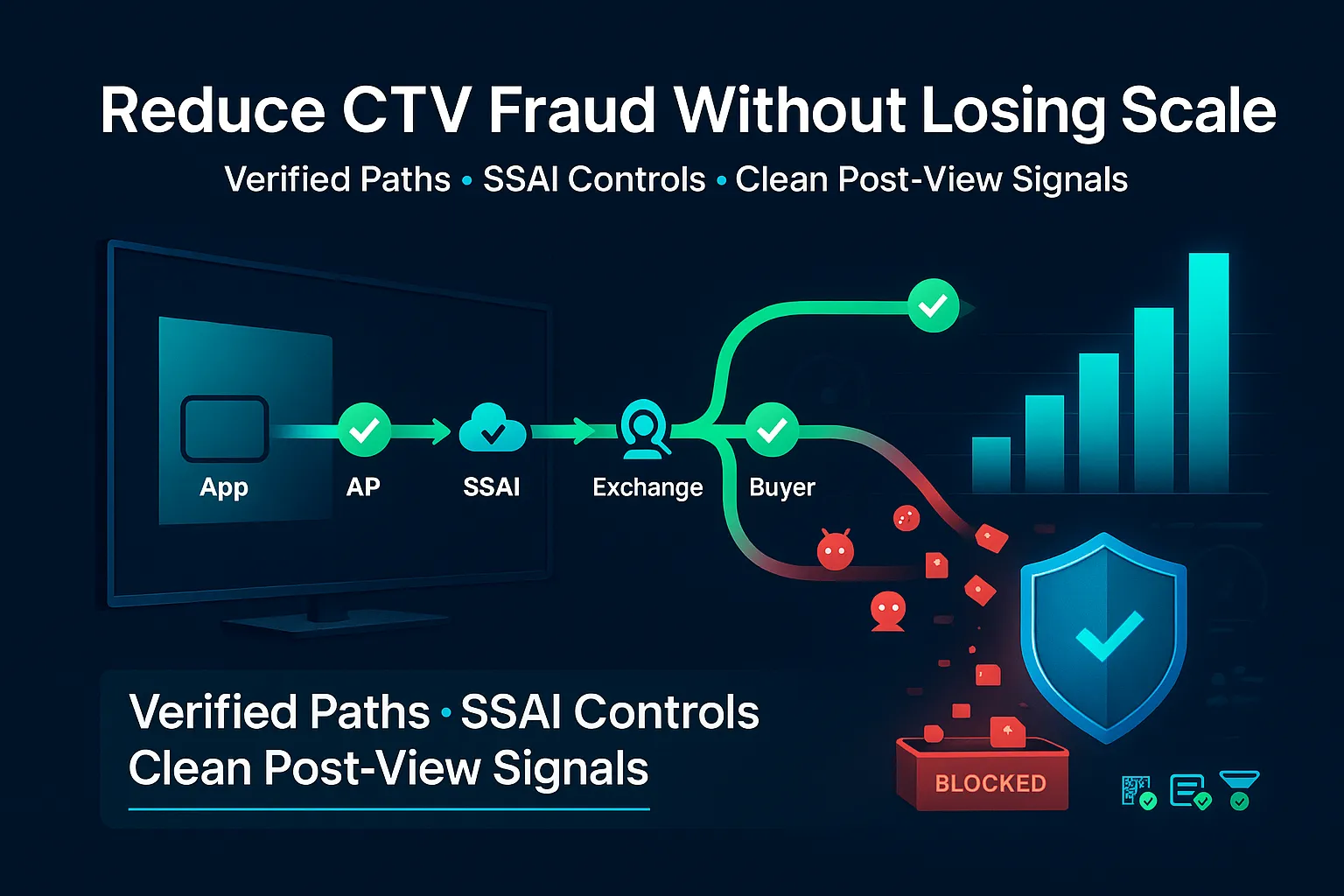
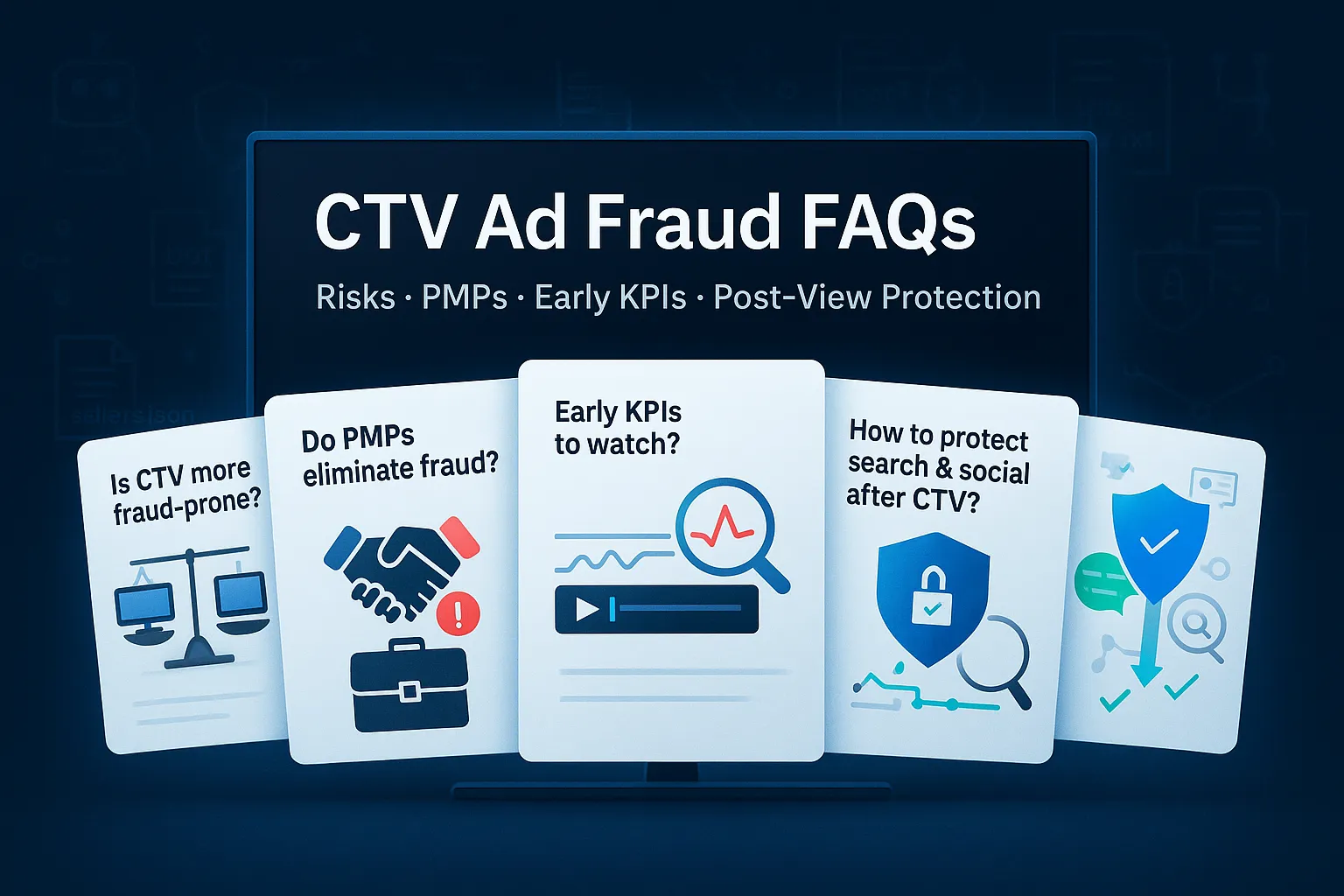
CTV is not inherently more fraudulent, but high CPMs and SSAI complexity create incentives. With strong supply-path controls, MRC-aligned verification, and down-funnel cleansing, CTV can be as safe as other channels.
They reduce risk by narrowing counterparties but do not remove it. Still apply app-ads.txt checks, sellers.json/SCO validation, and SIVT filtering.
Unusual spikes in completion with flat reach, identical device IDs across apps, impression bursts from a limited SSAI IP range, and post-exposure traffic that fails basic quality checks (high bounce, no scroll, zero form completion).
Use Spider AF PPC Protection to block invalid audiences and IPs, and Fake Lead Protection to remove fake sign-ups that poison bidding models.
CTV scales reach, but fraud follows money. Standards are improving and verification is maturing, yet the critical leaks often appear after the view: low-quality site visits, junk leads, and tainted signals. Spider AF helps you close those gaps. Start by protecting paid media and inbound traffic with PPC Protection, remove fraudulent conversions with Fake Lead Protection, and monitor your campaign pages with SiteScan.

MFA growth, AI-driven fraud risks, and how top advertisers are protecting their budgets. Free PDF!