If your search campaigns are quietly underperforming, the Google Search Partner Network could be why. Fake clicks, parked domains, and polluted optimization signals are still slipping through—even as Google rolls out new 2025 transparency tools. Here's how to diagnose what's draining your budget and actually stop it.
If your performance has dipped while running on the Google Search Partner Network (GSPN), you’re not imagining it. “Search partners ad fraud” is the term many marketers use when low-quality or fake clicks slip in via search partner sites—parked domains, site directories, even YouTube search results—rather than Google.com. That traffic can quietly drain budget, pollute your optimization signals, and flood CRM with junk leads. Google defines search partners as third-party sites that show Google search ads, including domain parking pages and YouTube search results.
Two things can be true at the same time in 2025: (1) Google has rolled out new transparency features for SPN and added guardrails; and (2) advertisers still report pockets of suspicious activity and messy remediation. In August 2025 Google announced full placement reports for Search, Shopping, and App campaigns so you can see exactly where SPN impressions occurred. Google also says domain parking is default opt-out for new campaigns, with a phased opt-out across all campaigns by the end of 2025, and it introduced pre-screen brand safety lists via DoubleVerify, IAS, and Zefr.
At the same time, independent monitoring has repeatedly flagged SPN opacity and brand-safety concerns. In late 2023, after an Adalytics investigation, Google temporarily let advertisers opt out of the Search Partner Network across campaign types. And in mid-2025, Japanese agencies reported Google credits tied to a “recent issue” on SPN impacting ad placement quality (not refunds, but credits)—highlighting how complex post-incident cleanup can be in practice.
Against this backdrop, ad fraud prevention is no longer optional. According to Spider AF's 2025 Ad Fraud White Paper, the average ad fraud rate was 5.1% in 2024, with some networks exceeding 46.9%; in extreme cases, up to 51.8% of a company’s ad budget was impacted. When fraud filters out invalid traffic, conversion rate from valid clicks is roughly 2x higher than from invalid clicks.
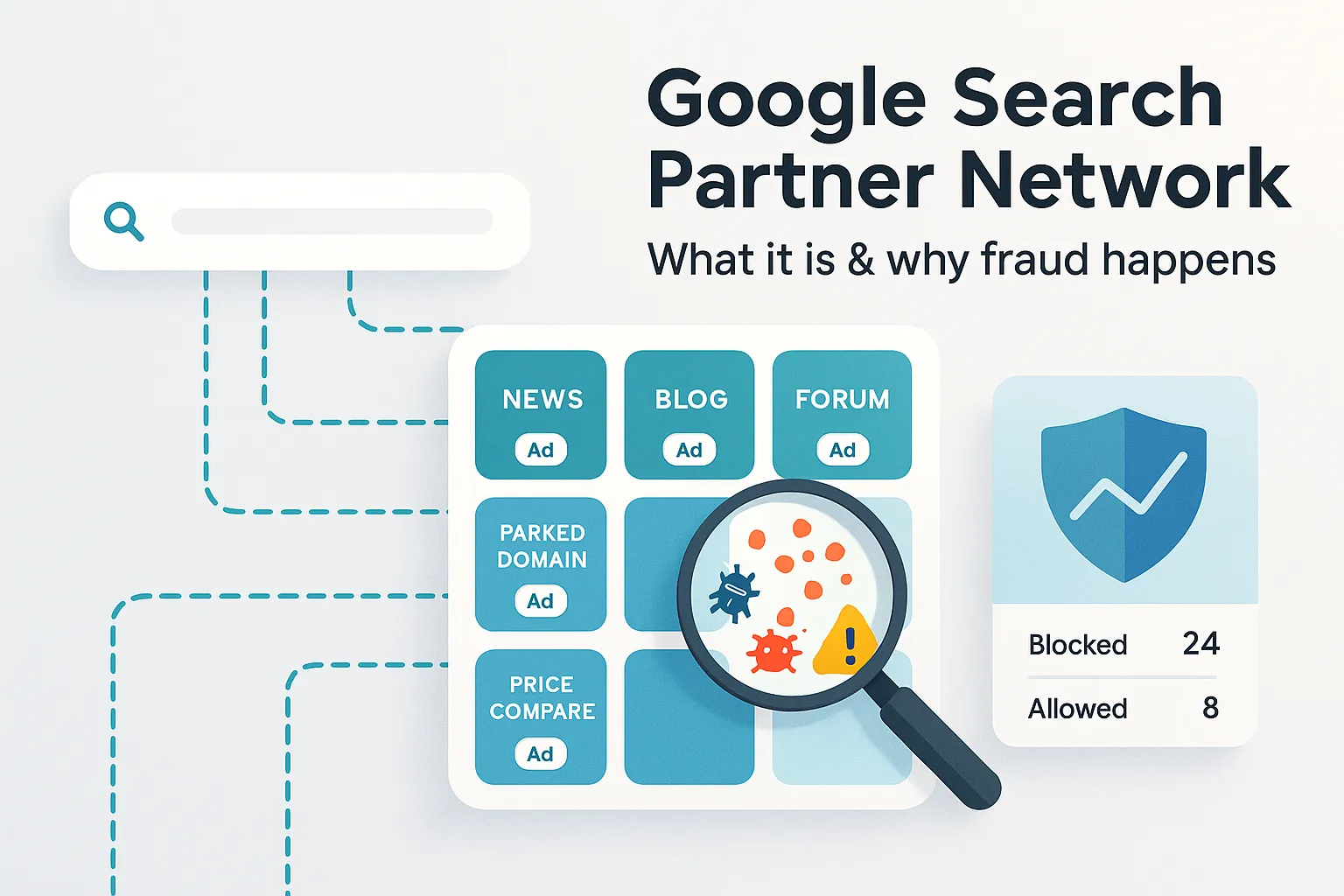
Google’s SPN includes search results on partner sites, domain parking results, site directories, product detail pages, and YouTube search results / video watch pages—all billed on click.
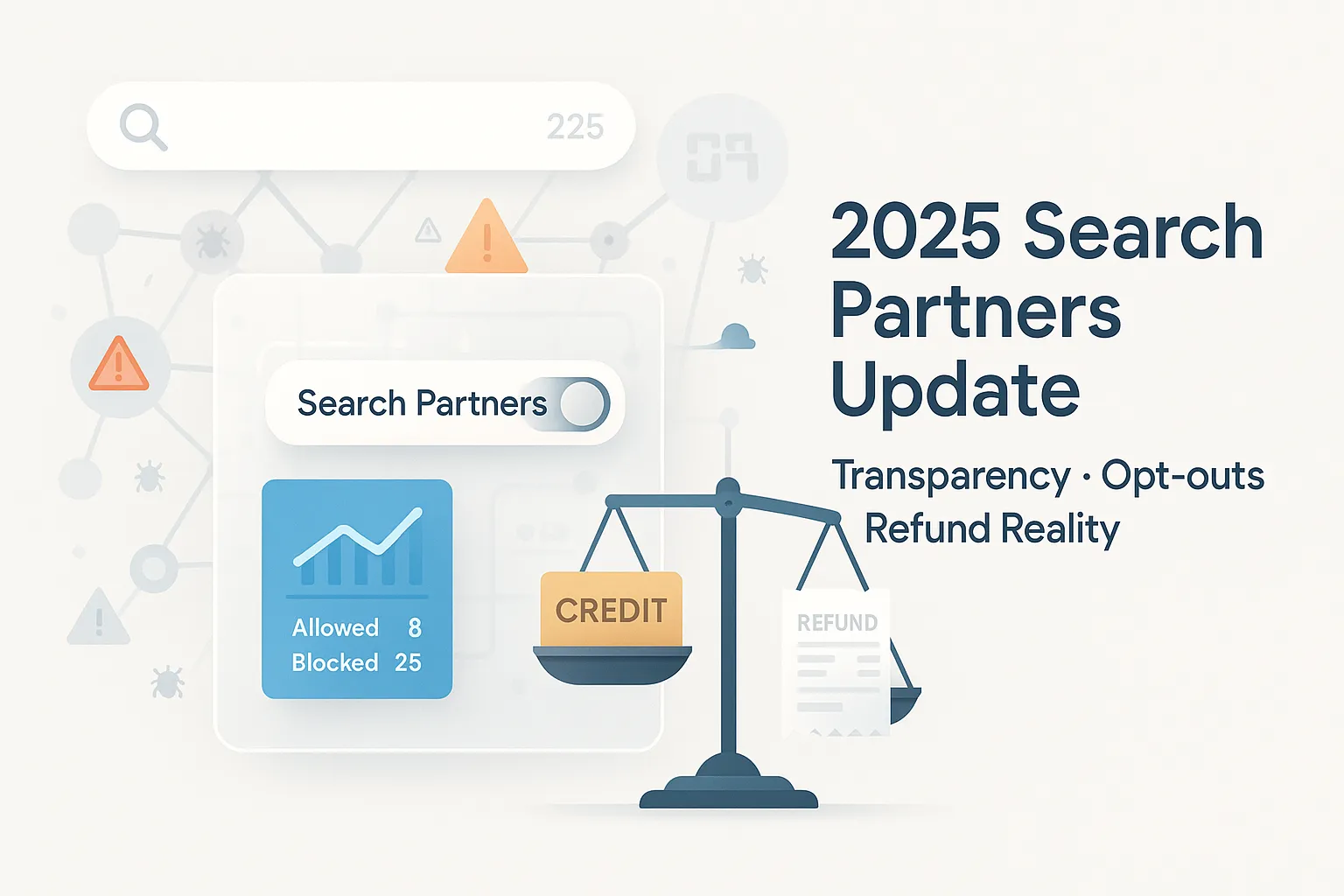
Some agencies reported credits applied in July 2025 for SPN-related quality issues—useful financially, but operationally messy (budget accounting, agency contracts, timing).
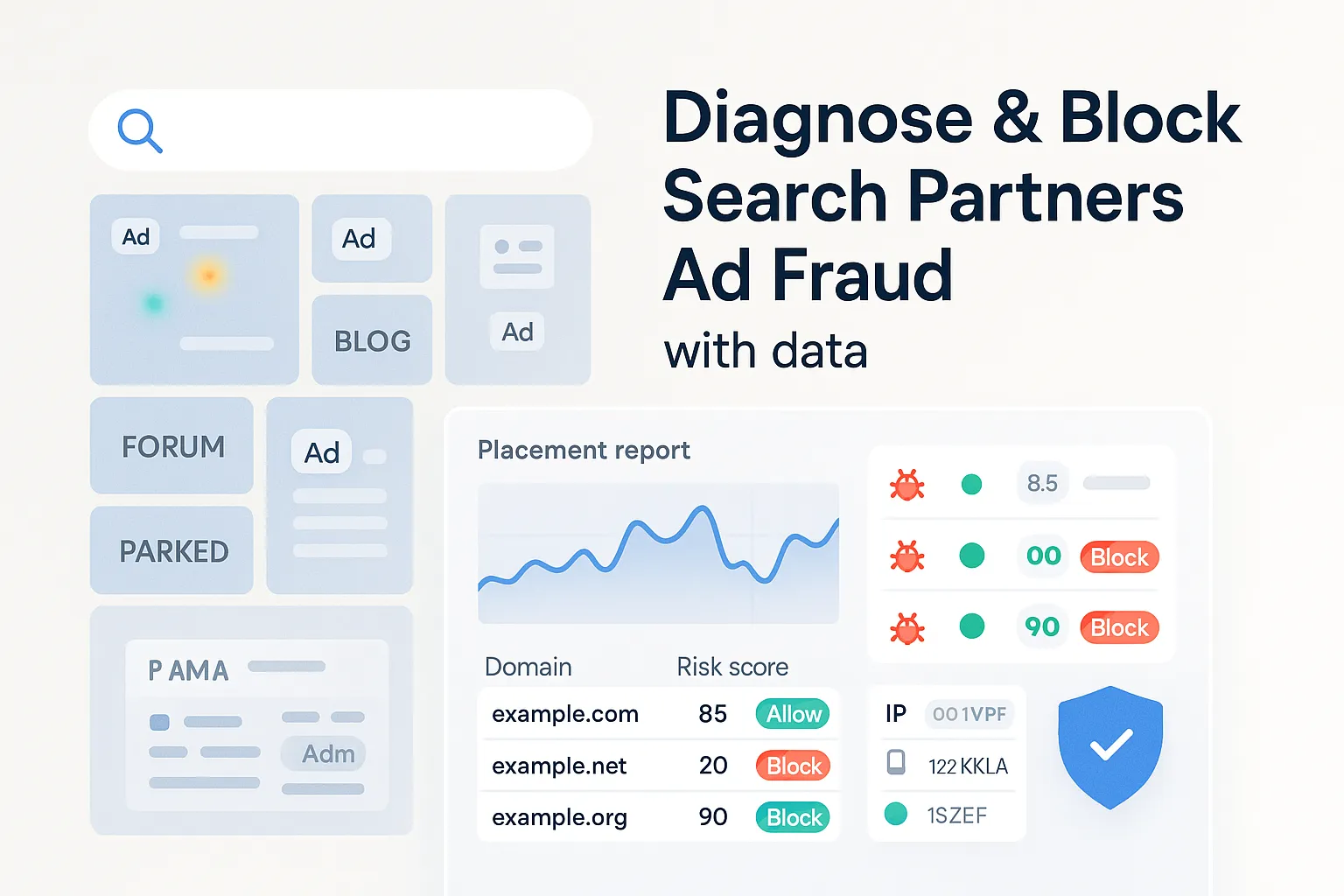
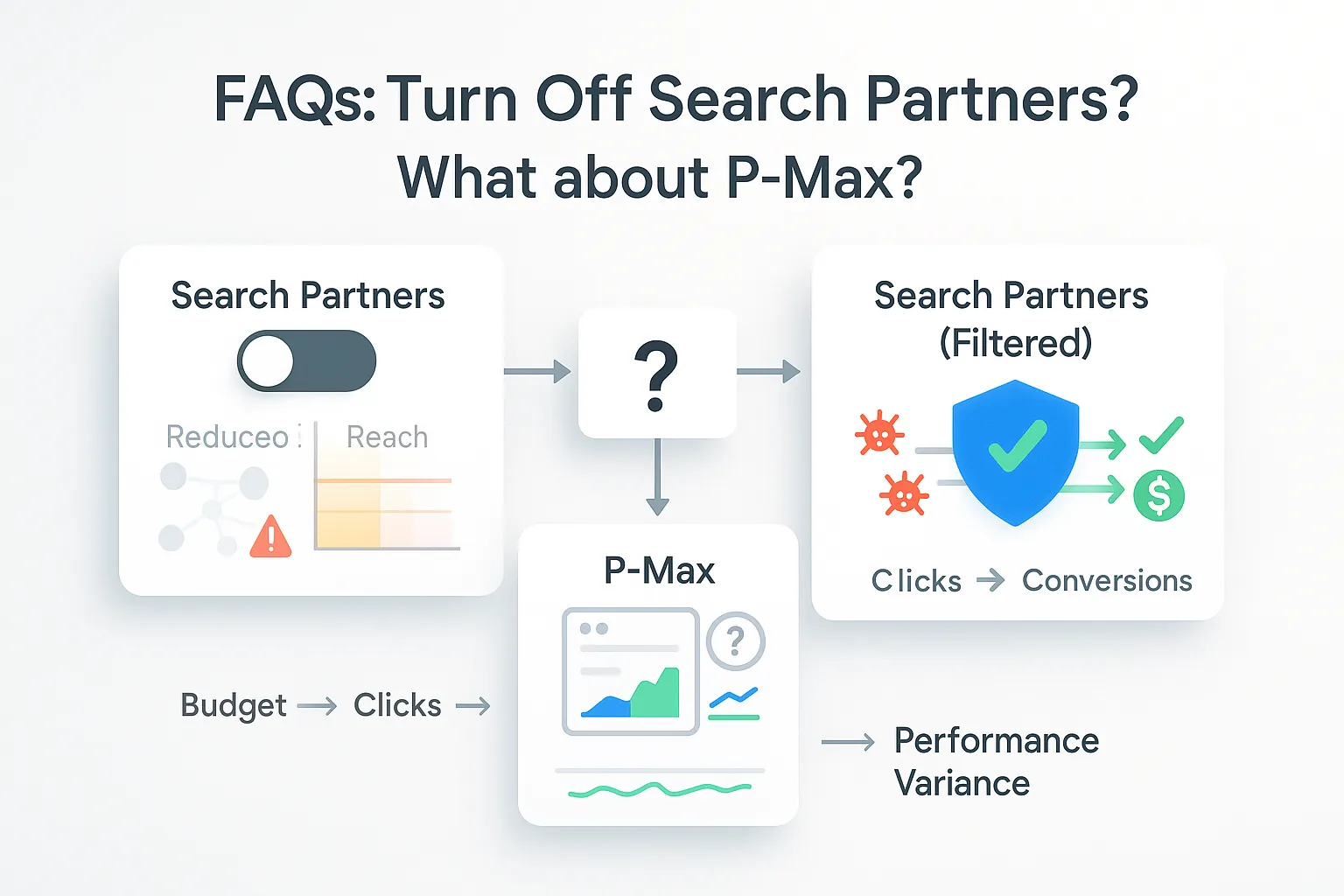
If your SPN performance is volatile, you now have stronger tools: placement reports, brand-safety pre-screens, and domain-parking opt-outs. But when in doubt, start with strict exclusions and Spider AF filtering rather than a blanket shut-off. (Yes, Google has allowed broader SPN opt-outs before.)
Auto-optimization can be exploited by bots and low-quality traffic. Spider AF observed P-Max & Search Partner abuse leading to fake clicks and off-target leads; FLP + placement fixes reversed the damage.
Watch billing notes and account emails; agencies documented SPN “placement quality” credits in June–July 2025. Keep your own anomaly logs to support claims.
You don’t need to fear search partners—you need visibility, controls, and clean data. With 2025’s reporting upgrades, plus enterprise-grade fraud filtering, you can keep reach without inviting waste. According to Spider AF's 2025 Ad Fraud White Paper, some networks saw fraud rates as high as 46.9%; treating SPN traffic as “default safe” is a costly assumption.
Best product fit:
CTA: Ready to see what Spider AF blocks on your account in 14 days? Start a free trial of PPC Protection today → https://spideraf.com/ppc-protection

MFA growth, AI-driven fraud risks, and how top advertisers are protecting their budgets. Free PDF!