Meta's ad refund policy is stricter than most advertisers realise — poor performance won't cut it, and even unauthorized spend isn't guaranteed back. Knowing when a claim might work (and how to submit one) can save hours of frustration. Better yet, learn why blocking invalid traffic before it happens is the smarter play.
Meta reviews ad refund requests case‑by‑case and does not refund for poor ad performance or ROI. If a refund is granted, it may be issued as ad credits rather than cash, and monthly‑invoiced accounts may receive credit memos. The practical path is prevention: block invalid traffic and fake leads so you don’t need to file claims in the first place.
PPC Protection (Spider AF) — free trial: https://spideraf.com/ppc-protection
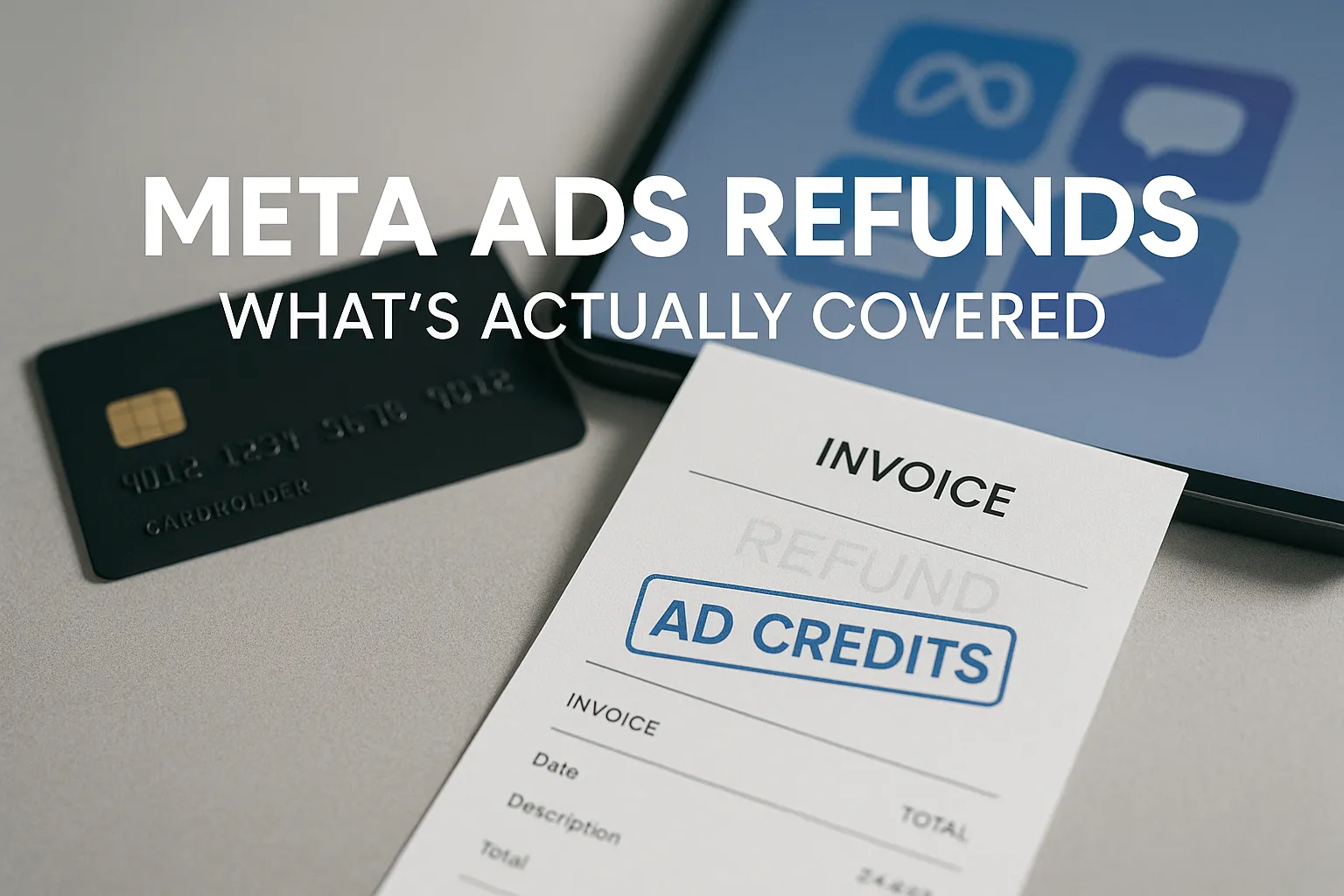
Meta explains that any refund for ads on Facebook, Instagram, or Messenger is at Meta’s sole discretion and evaluated case‑by‑case. Critically, Meta states it does not issue refunds for poor ad performance or return on investment. In situations where a refund is approved, Meta may issue it as ad credits; if you use monthly invoicing, credit memos can apply against future spend.
Unauthorized activity can be considered, but it isn’t automatically refundable. Meta’s Self-serve Ad Terms state you’re responsible for orders placed through your ad account, so hacked-spend refunds remain discretionary and hinge on evidence and support review. For example, after a widely reported delivery glitch in April 2023, Meta moved to compensate affected advertisers, though fulfillment timelines varied. If you suspect unauthorized activity, review your Billing section and support inbox, capture evidence, and contact support promptly.
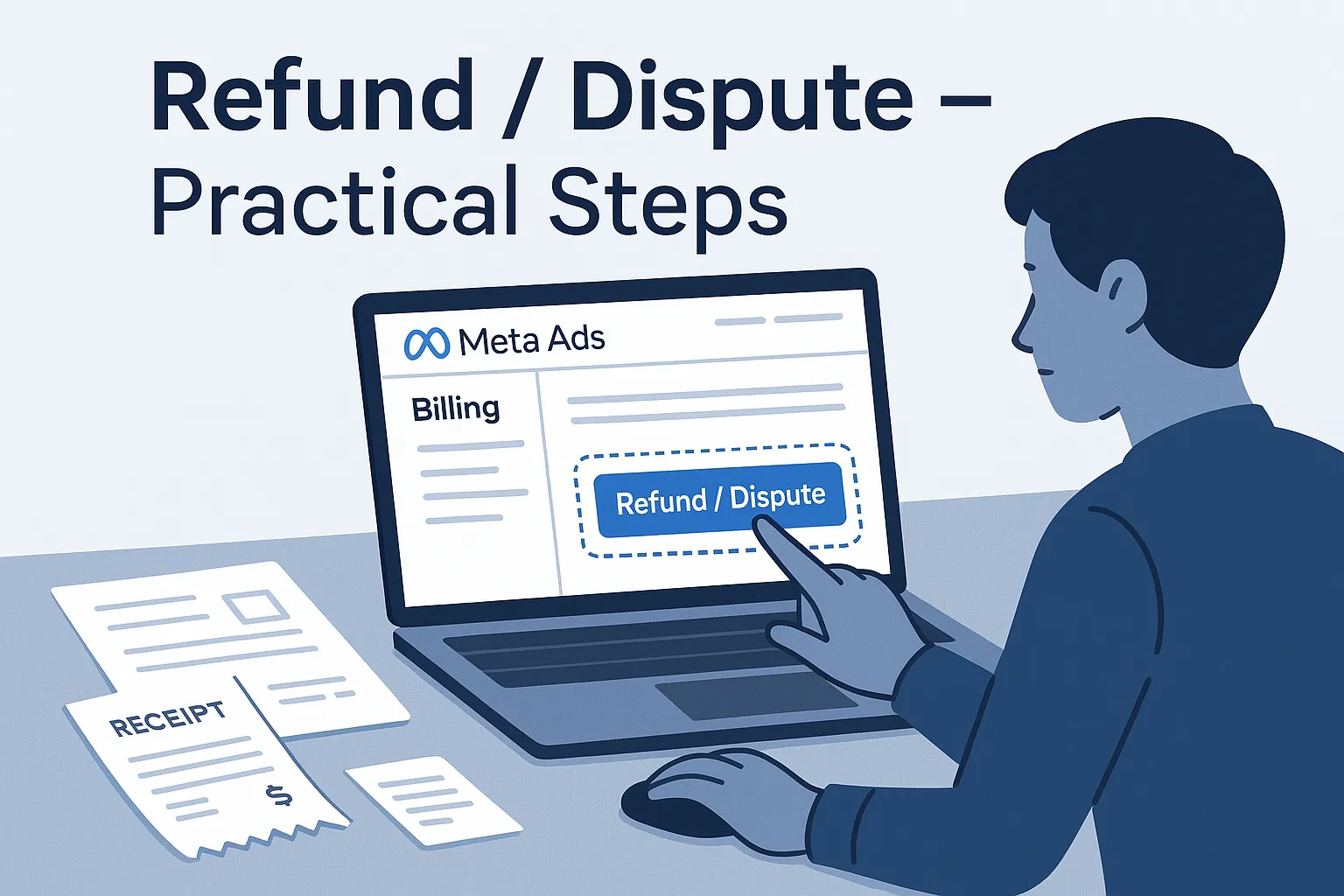
Reality check: Refunds for “bad results” almost never succeed under Meta’s policy. The more your claim hinges on objective billing/technical evidence, the better your odds.
Invalid traffic (IVT)—bots, click farms, data‑center traffic—and fake leads waste budget and poison campaign learning. According to Spider AF’s 2025 Ad Fraud White Paper, around 5.1% of clicks were fraudulent in 2024 (JP market analysis), and valid vs. invalid clicks showed roughly a 2x CVR gap—meaning cleanup directly improves conversion efficiency. Globally, estimated ad‑fraud losses reached $37.7B in 2024 and are projected to grow further in 2025.
Not for performance dissatisfaction. Meta’s policy explicitly says refunds aren’t given for poor results or ROI. Focus on preventing IVT so you don’t pay for it in the first place.
It depends. Meta may refund to your payment method, but if that isn’t possible you may receive ad credits; monthly‑invoiced accounts may receive credit memos.
Yes, for incident‑level glitches/outages Meta has compensated accounts, though the form and timeline vary.
Meta rarely refunds ad spend, especially when the complaint is simply “results were bad.” Even when granted, compensation may come as ad credits, not cash. The faster, more reliable ROI play is to stop invalid clicks and fake leads before they hit your budgets and models. If you run Meta ads, put prevention in place now:

MFA growth, AI-driven fraud risks, and how top advertisers are protecting their budgets. Free PDF!