Your PPC dashboard looks fine—so why does CPA keep creeping up? Search arbitrage is likely the culprit: fraudsters buy cheap clicks, route users through ad-stuffed junk pages, and profit while your budget bleeds. Learn how to spot the telltale signals, cut off the worst placements, and get your bidding algorithms back on track.
If your paid search looks fine on the surface but conversions feel “squishy,” you may be leaking budget to search arbitrage. In simple terms, arbitrageurs buy cheap clicks from one source, send users to pages that trigger more (higher-priced) ad clicks, and pocket the difference. The practice thrives on low-quality placements and auto-optimization loops that reward volume over value. It often overlaps with made-for-advertising (MFA) sites and parked domains—environments heavy on ads, light on user value. Industry bodies have flagged MFAs as a persistent problem, and buyers are urged to identify and avoid them.
Why should this matter now? Because fraud and low-quality traffic quietly erode ROI and pollute your optimization signals. In 2024, Spider AF analyzed 4.15 billion clicks and found an average ad fraud rate of 5.1% across web advertising; applying similar rates to global ad spend implies billions in annual losses. Fraudulent or low-intent clicks convert at around half the rate of legitimate clicks, doubling your effective CPA.
The good news: you can identify the patterns, lock down the worst placements, and restore clean learning signals. This guide explains how search arbitrage works, where it hides, the metrics it skews, and exactly how to stop it—then points you to tools that take the heavy lifting off your team.
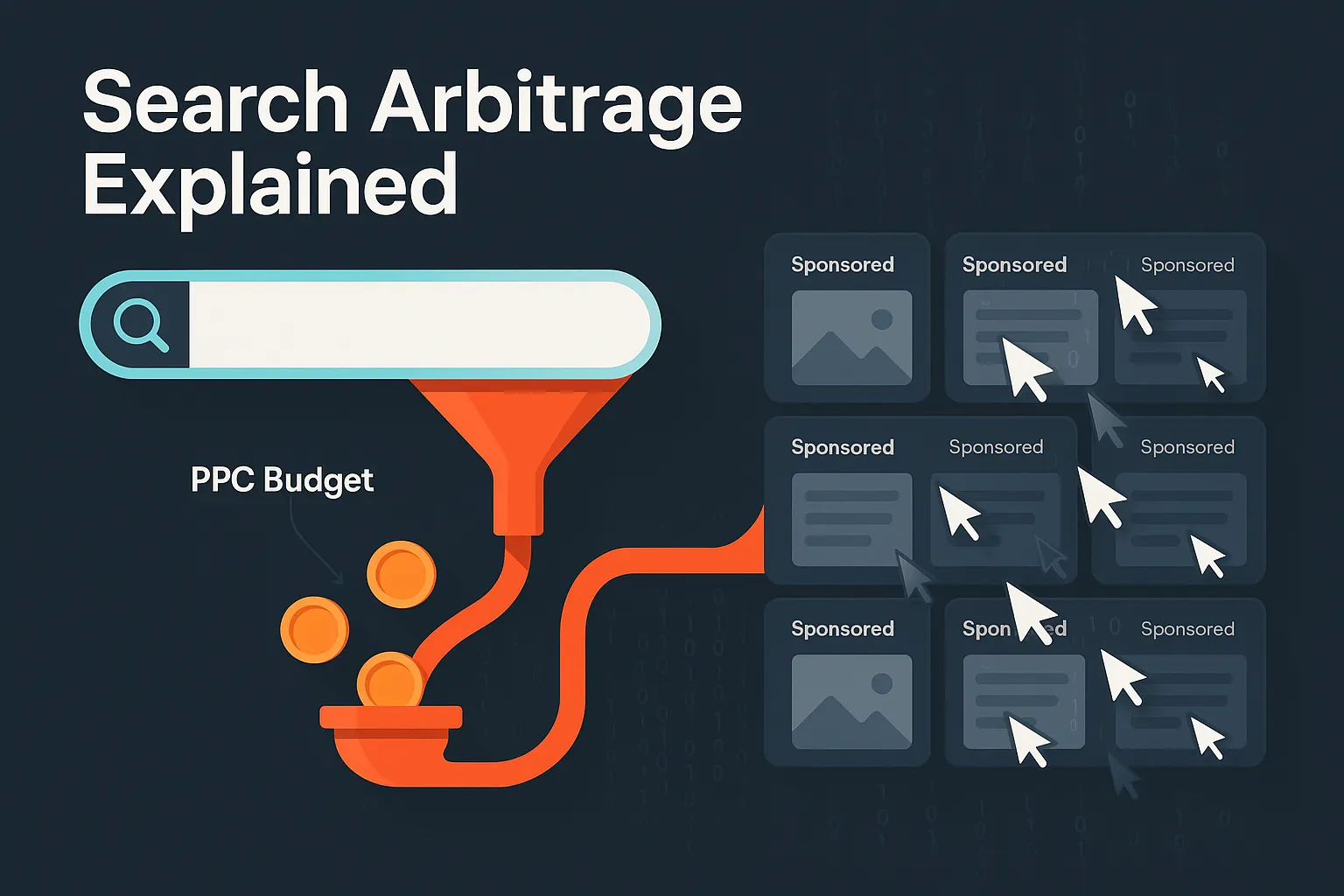
Search arbitrage uses the cost spread between traffic acquisition and ad monetization: buy traffic cheaply, route users to search feeds or pages stuffed with ads, earn more from the secondary ad clicks than you paid for the first click. Variants include driving paid social/native traffic into search results pages or parked domains whose sole purpose is to generate ad revenue.
The worst offenders are often classed as MFA (made-for-advertising)—sites with aggressive ad density, generic content, and heavy dependence on paid traffic. Industry guidance recommends buyers reduce or eliminate spend on such inventory.
Beyond individual accounts, programmatic waste at an ecosystem level has been repeatedly documented, with trade groups urging transparency and supply-path hygiene—context that aligns with the arbitrage problem in search/display.
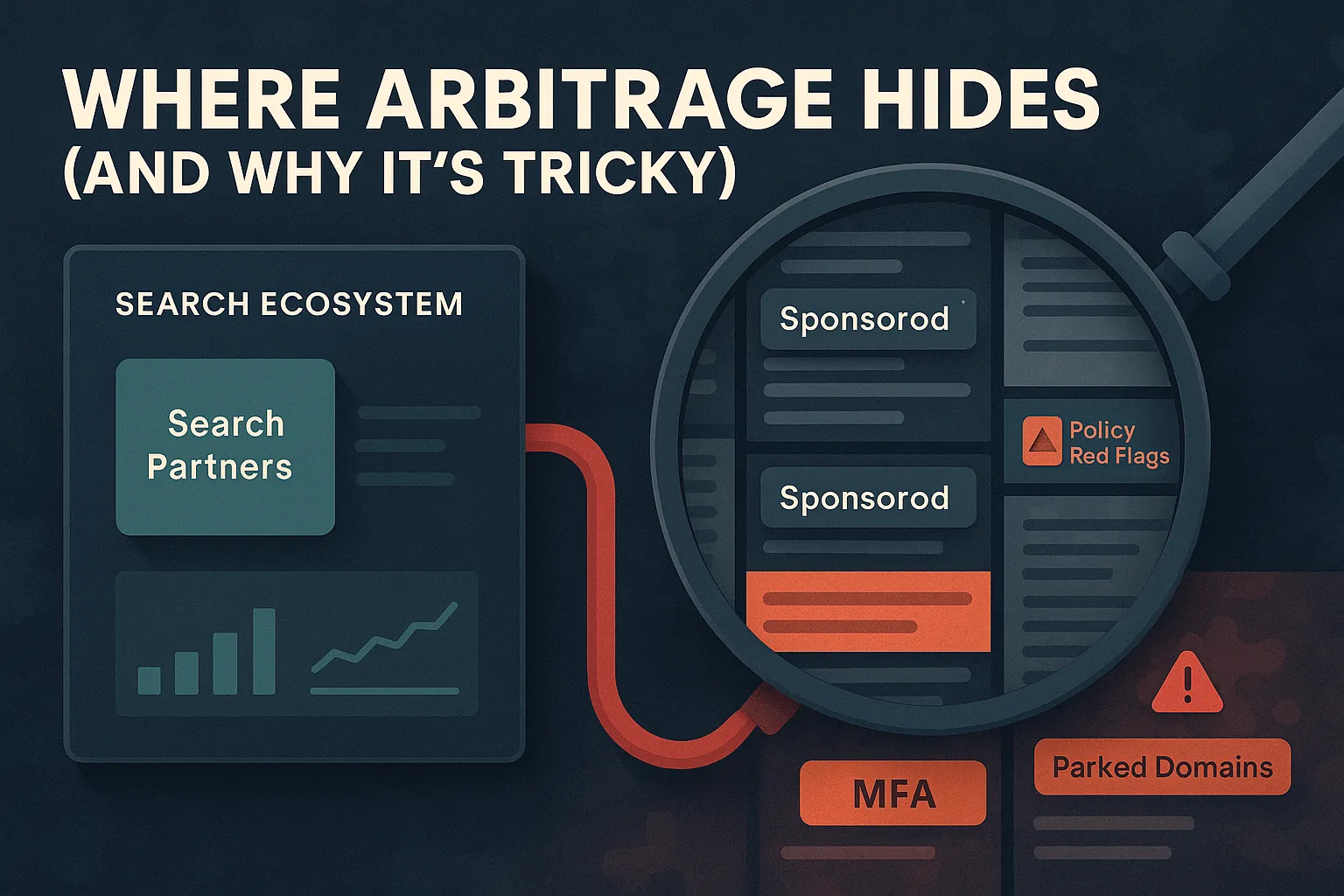
Google’s Search Partner Network can include parked domain sites that show “related searches” leading to pages of sponsored ads. That environment is a classic arbitrage loop. In 2024–2025, Google introduced changes limiting parked-domain exposure and giving advertisers more control and transparency, including default opt-outs for parked domains in some cases.
MFAs manufacture sessions cheaply, refresh ads aggressively, and monetize user churn. Industry guidance clarifies definitions and recommends buyer controls to reduce spend on this supply.
Google Ads “Abusing the ad network” policy prohibits attempts to game ad auctions or circumvent review—behavior frequently associated with arbitrage schemes.
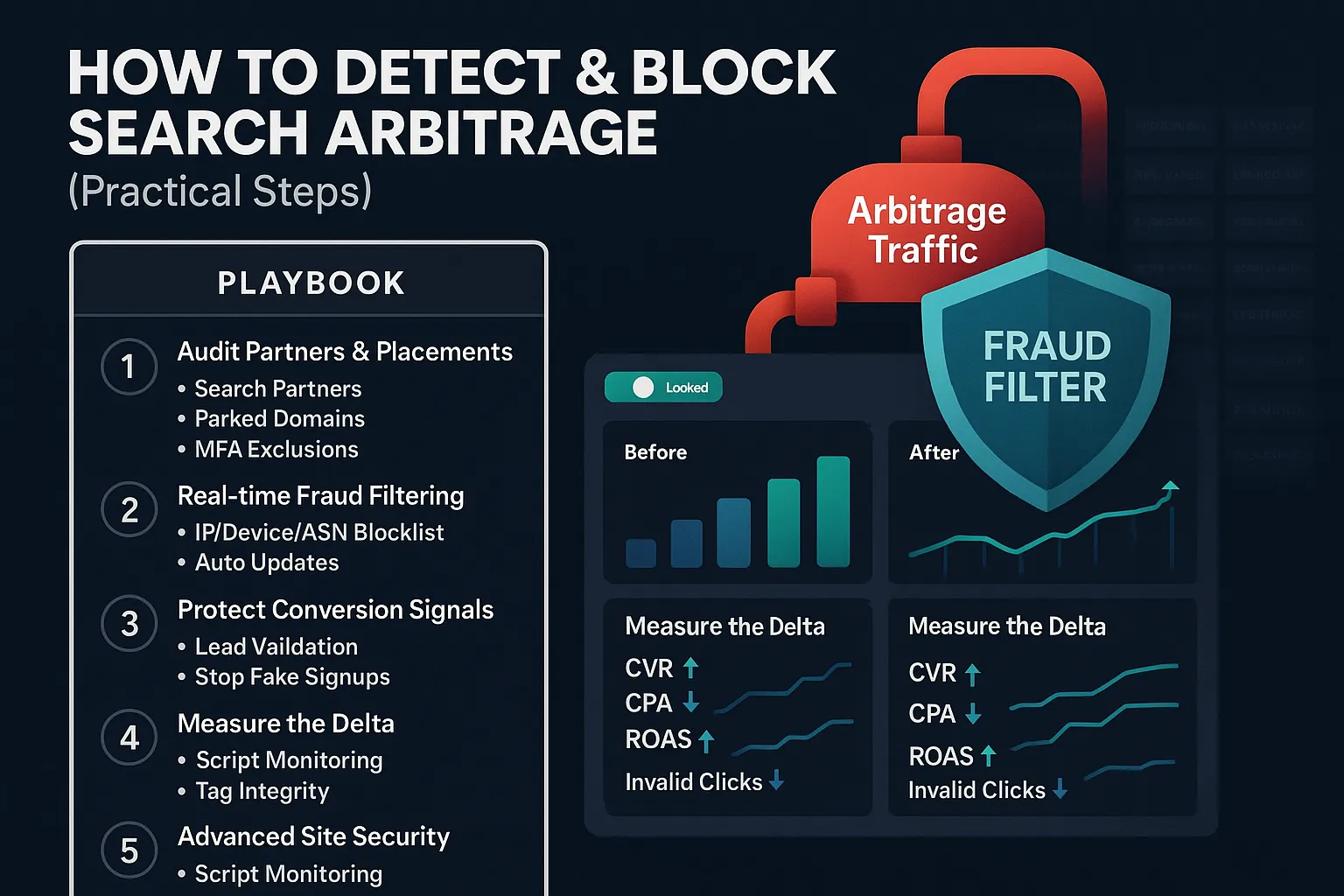
Advertisers using Spider AF report concrete savings and cleaner results:

It’s not a legal term; platforms judge behavior against their policies. Practices that abuse ad networks or provide low-value destinations risk enforcement and removal.
No. But parked domains and low-value partners pose higher risk. Recent platform updates have improved controls; you should still monitor and exclude.
Across web ads, Spider AF measured an average 5.1% invalid click rate in 2024 and estimated tens of billions in losses at global scale. MFAs remain an industry focus.
Search arbitrage thrives on low-value placements and dirty data. Clean up the source (parked/MFA exclusions), clean up the signal (block bots and fake leads), and your bidding models get smarter fast.
Best next step: start a free trial of Spider AF PPC Protection to automatically detect and block invalid clicks and poor placements across Google, Meta, Microsoft, TikTok and more—so your spend reaches real users and your algorithms learn from real outcomes. → https://spideraf.com/ppc-protection

MFA growth, AI-driven fraud risks, and how top advertisers are protecting their budgets. Free PDF!