.png)
Supply chain attacks don't break down your front door — they walk right through it using vendors and scripts you already trust. From SolarWinds to Magecart, the biggest breaches of recent years exploited this exact blind spot. Here's how these attacks actually work, and what you can do to stop them.
Supply chain attacks have emerged as one of the most pressing cybersecurity threats in 2025. Instead of targeting a company head-on, attackers infiltrate trusted vendors, third-party software, or external scripts to compromise the final target. This indirect method makes them harder to detect and often far more damaging.
With global organizations increasingly reliant on cloud services, SaaS platforms, and third-party marketing scripts, attackers are exploiting weak links in the digital ecosystem. The results can be catastrophic: massive data breaches, financial losses, regulatory penalties, and irreparable brand damage.
According to the U.S. Cybersecurity & Infrastructure Security Agency (CISA), supply chain attacks are particularly dangerous because they “undermine trust in software and services that organizations rely on every day.” From the SolarWinds breach that exposed U.S. federal agencies to Magecart campaigns siphoning customer credit card data, these incidents are no longer isolated — they are mainstream.
In this article, we’ll break down:
A supply chain attack occurs when cybercriminals compromise a third-party vendor, service, or script that an organization relies on. Instead of breaking into a company directly, attackers infiltrate through the trusted “suppliers” of software, hardware, or digital services (Cloudflare).
Common forms include:
Because organizations rarely control every dependency, attackers exploit this “trust gap.”
These examples show that supply chain attacks target trust itself — in vendors, in updates, and in widely used digital tools.
Unlike typical breaches, supply chain attacks scale exponentially. One compromised provider can cascade to thousands of clients. Some reasons they’re uniquely dangerous:
Research also shows that 60% of small businesses close within six months of a major cyberattack due to lost trust and financial burden (BlueVoyant).
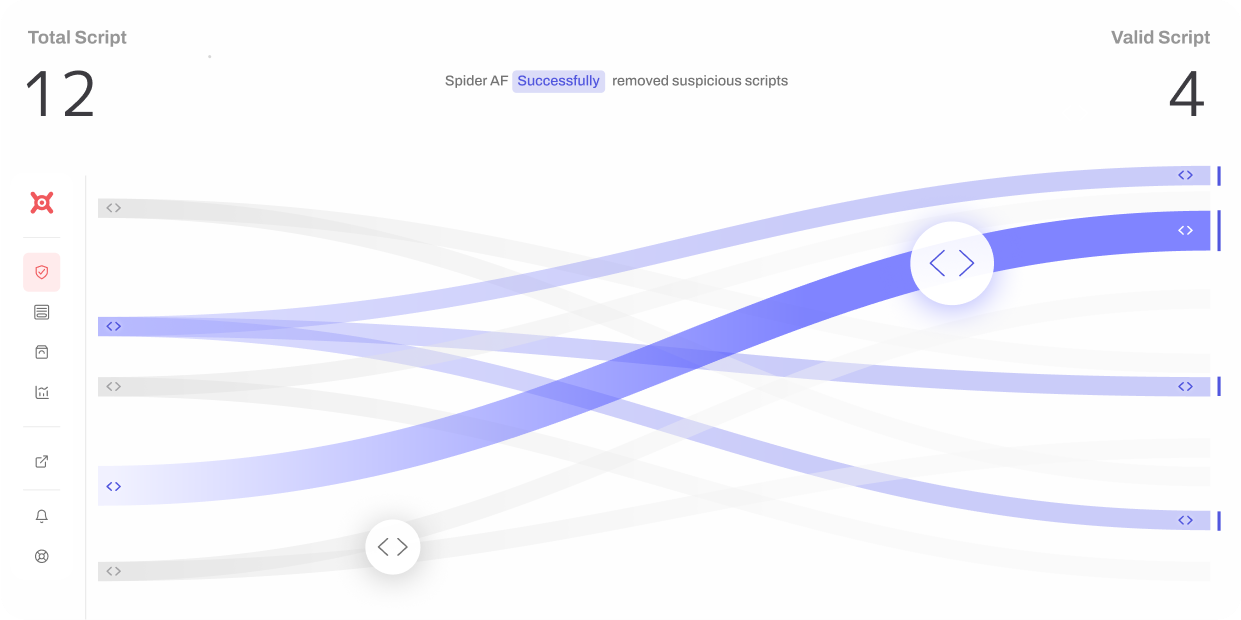
Defending against supply chain attacks requires layered security and vendor oversight. Best practices include:
👉 SiteScan essentially acts as a “security camera for your website scripts.”
Q1: Who is most at risk of supply chain attacks?
Any business that relies on third-party vendors, especially e-commerce, SaaS platforms, and financial services.
Q2: Are supply chain attacks the same as phishing?
No. Phishing targets individuals with fraudulent messages. Supply chain attacks target organizations indirectly by infiltrating their trusted partners or tools.
Q3: How can e-commerce businesses specifically prevent supply chain attacks?
By monitoring third-party scripts (analytics, payment tags, chatbots) for unauthorized changes. Tools like Spider AF SiteScan are designed for this exact use case.
Q4: What regulations apply to supply chain security in 2025?
Supply chain attacks exploit the trust businesses place in their vendors, scripts, and software. From SolarWinds to Magecart, the last decade has shown how devastating these attacks can be. With the growing complexity of digital ecosystems, the risks in 2025 are greater than ever.
The good news? Proactive measures like vendor audits, SBOMs, and continuous client-side monitoring significantly reduce exposure.
That’s where Spider AF SiteScan comes in. By providing real-time monitoring, anomaly detection, and compliance support, it helps businesses stay ahead of attackers — before small script changes turn into multimillion-dollar breaches.
👉 Protect your website today with a free SiteScan diagnosis and secure your supply chain against tomorrow’s threats.

MFA growth, AI-driven fraud risks, and how top advertisers are protecting their budgets. Free PDF!