
Click fraud drains PPC budgets through bots, click farms, and competitor clicks. Learn the warning signs in your campaign data and 6 ways to prevent it.
Quick answer: Click fraud is the practice of generating fake, non-human, or intentionally worthless clicks on pay-per-click (PPC) ads to drain an advertiser’s budget, inflate a publisher’s revenue, or skew campaign data. In 2025, advertisers lost an estimated $32.6 billion to ad fraud globally, according to Spider Labs’ 2026 Ad Fraud White Paper.
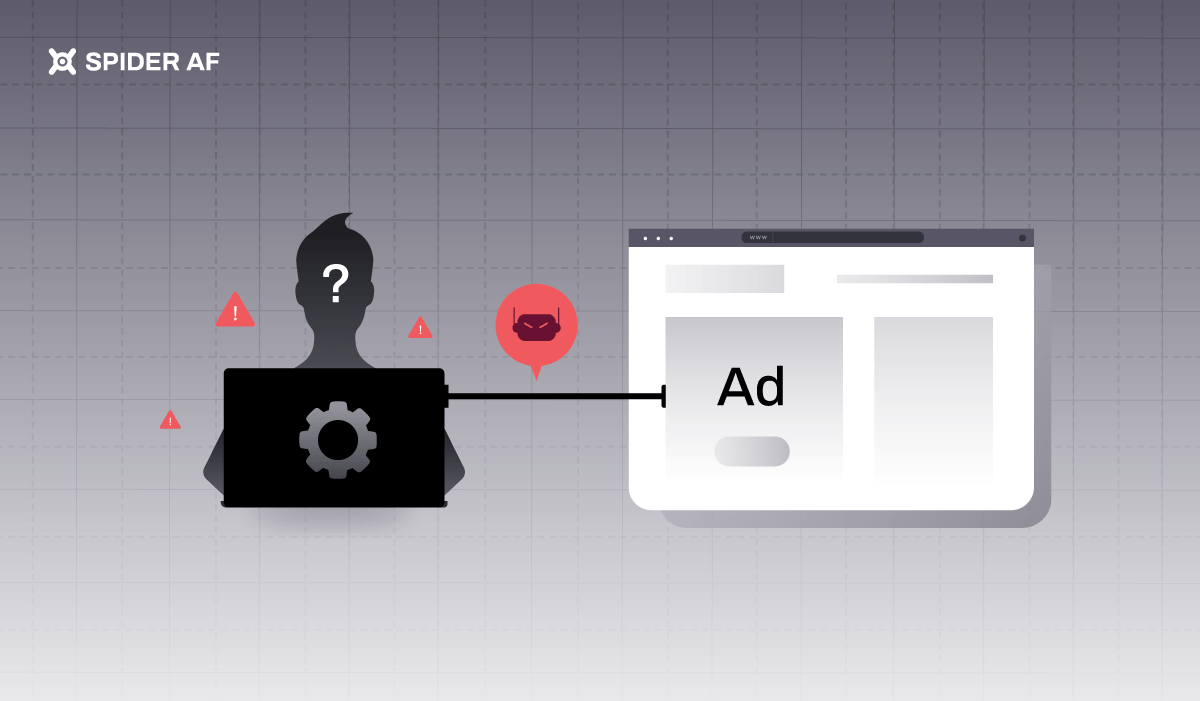
Whether you’re running Google Ads, Meta campaigns, or programmatic display, click fraud is probably already costing you money — without your knowledge.
This guide covers what marketers and advertisers need to know in 2026: what click fraud is, the seven established types (plus the new AI-driven category), how to spot fraud in your own campaign data, and concrete steps to protect your budget.
Click fraud is a form of ad fraud in which individuals, automated bots, or organized networks deliberately click on pay-per-click (PPC) or cost-per-click (CPC) ads with no genuine interest in the advertiser’s product or service. Every fraudulent click charges the advertiser while delivering no real value.
Click fraud is a subcategory of invalid traffic (IVT) — any ad interaction that does not come from a real, interested human user. It is distinct from accidental clicks or general impression fraud, because it specifically targets the click event that triggers a charge.
The scale of ad fraud has grown sharply, driven by AI-generated bot traffic and the explosion of made-for-advertising (MFA) websites.
According to Spider Labs’ 2026 Ad Fraud White Paper — based on the analysis of 6.05 billion clicks, $6.2 billion in estimated ad spend, and activity across 242 countries and regions:
Spider Labs’ 2026 data covers 174,483 analyzed domains and campaign activity across 242 countries and regions. Read the full 2026 Ad Fraud White Paper.

Understanding the specific mechanisms behind click fraud helps you detect and prevent it more effectively. Here are the seven most common types — plus a new category that has emerged in 2026.
The simplest form: individuals physically click on ads repeatedly to exhaust an advertiser’s budget. This is often the work of competitors, employees at rival firms, or opportunistic bad actors. While manual clicking is limited in scale, it is also the hardest for automated systems to flag definitively.
Click farms are large-scale, coordinated operations — often employing dozens or hundreds of low-paid workers — whose sole job is to click on ads. Located predominantly in regions with low labor costs, click farms generate artificial traffic that skews performance metrics and drains ad budgets at volume. According to Spider Labs’ 2026 data, click farms are the primary driver of fraud in short-form video environments.
Sophisticated bots are programmed to simulate human browsing behavior: they make realistic mouse movements, pause before clicking, vary timing between interactions, and rotate device IDs to avoid detection. A botnet distributes this activity across thousands of compromised devices — each with a different IP address — making the fraud appear to come from a broad audience of real users.
In 2025–2026, AI-powered bots have raised the stakes significantly. These systems can pass CAPTCHAs, mimic genuine browsing patterns at the millisecond level, and adapt in real time — which is exactly why behavioral analysis alone is no longer a reliable filter.
Competitors deliberately click your ads to burn through your daily budget — knocking your ads offline and clearing more ad space for their own campaigns. This is especially common in high-CPC industries like legal services, finance, and home improvement.
Unlike bot traffic that originates from real consumer devices, data center traffic comes from server farms running automated click scripts. These clicks have no associated real user, no device fingerprint, and no browsing context — but they can be hard to distinguish from legitimate traffic at the platform level.
Some publishers offer users rewards — points, cash, or prizes — in exchange for clicking on ads. These users have zero genuine interest in the advertised product. The clicks are technically human, but they’re worthless to the advertiser — and prohibited by ad network policies, including Google’s rules against abusing the ad network.
Ad stacking involves placing multiple ads layered behind a single visible ad unit. When a user clicks the visible ad, the click may register against all of the hidden ads simultaneously — generating multiple charges for a single user interaction. The user only ever sees one ad, but the advertiser pays for several.
A new threat category has emerged as generative AI becomes more accessible. Fraudsters now use AI tools to build entirely synthetic browsing sessions — realistic user journeys complete with page views, scroll behavior, session length, and clicks — that defeat traditional behavioral analysis. The same tooling that powers programmatic ad optimization now churns out fraudulent impressions and clicks nearly indistinguishable from genuine user activity.
Early detection is critical. By the time click fraud shows up in ROI numbers, thousands of dollars in budget may already be gone. Ongoing click fraud monitoring comes down to watching four signals in your own campaign data.
A sudden spike in click-through rate (CTR) with no matching rise in conversions is one of the clearest warning signs of click fraud. Legitimate traffic converts; fraudulent traffic does not.
What to look for: As a rule of thumb, a CTR spike — say 20% or more — without a matching conversion lift, or a conversion rate that drops sharply despite stable or growing click volume.
A high volume of clicks from a single IP address or a narrow IP range — especially with no conversions to show for it — is a strong sign of click farm or botnet activity. Repeat clicks from the same source are one of the most common patterns; we cover them in detail in our guide to repeat-click fraud.
What to look for: Pull your IP-level click report in Google Ads or your analytics platform. Flag any IP that racks up 5–10+ clicks in a short window with zero downstream engagement — a starting point, not a hard rule. And keep in mind that sophisticated actors rotate or hide their addresses — see how IP masking is used in ad fraud — so an IP report is one signal, not proof.
Segment your click data by device type, geography, and time of day. Legitimate click patterns tend to follow your target audience’s behavior. Fraudulent patterns often don't match your actual market.
What to look for:
Fraudulent clicks typically produce zero meaningful engagement: the user “arrives,” no real session occurs, and they immediately leave — or never truly arrive at all.
What to look for: Sessions with 0-second duration, single-page visits with no scroll activity, or suspiciously low average session depth on pages linked from ads.
Detection tells you what has already happened. Prevention stops fraud before it drains your budget. Use the following strategies in combination for the strongest click fraud prevention.
Google Ads allows you to block specific IP addresses from seeing your ads. When you identify an IP source responsible for fraudulent clicks, add it to your exclusion list immediately.
How: In Google Ads, navigate to Campaign Settings → IP Exclusions and add the offending addresses. Google Ads lets you exclude up to 500 IP addresses per campaign.
Limitation: IP blocking is reactive, not proactive — and sophisticated bots rotate IPs dynamically, so this alone is not sufficient.
If your product only serves customers in specific countries or regions, limit your ad serving accordingly. Remove broad geo-targeting that opens your campaigns to high-risk traffic regions. Also use audience targeting and exclusions to narrow delivery to users who match your genuine customer profile. The tighter your audience, the less room fraud has to operate.
Google Ads automatically filters the invalid clicks it can identify and applies credits to your billing — these appear as invalid activity adjustments. Review them regularly. If you notice suspicious activity that hasn’t been credited, you can request a manual review; according to Google’s invalid traffic documentation, manual reviews cover traffic received over the last 60 days.
Important: Google’s filtering works on the signals Google can see at the platform level. It doesn’t see what happens on your site after the click — which is where much of the evidence of fraud lives. Treat platform credits as a baseline, not full coverage.
One of the most effective prevention strategies in 2026 is deploying automated, third-party click fraud protection that works independently of the ad platforms themselves. These tools analyze click patterns in real time using machine learning, block suspicious traffic before it costs you money, and provide audit trails for credit claims.
Spider AF PPC Protection monitors clicks across Google Ads, Meta, and other major platforms, flags invalid sources in real time, and pushes IP and audience exclusions back to those platforms. You also get the evidence trail you need for invalid activity credit claims.
If you run display or programmatic campaigns, audit your placement reports regularly. Made-for-advertising (MFA) sites — low-quality, AI-generated content sites designed purely to harvest ad revenue — grew 1,409% year over year in Spider Labs’ 2026 data. Exclude any domain that shows high impression/click volume with no engagement or conversion. Automated campaign types deserve the same scrutiny: see how Performance Max campaigns get exploited.
Conversion tracking makes click fraud far easier to expose. When you judge every click by whether it leads to a meaningful action — a form fill, a purchase, real page depth — fraudulent sources stand out fast. Set up robust conversion tracking and use that data to identify click sources with consistently zero downstream value.
The click fraud ecosystem has changed materially in the past 12–18 months. Advertisers who last reviewed their protection setup in 2024 or earlier may be exposed to threats that didn’t exist then.
Generative AI has crossed into fraud tooling. Modern click bots can generate synthetic browsing sessions with realistic mouse dynamics, scroll depth, and time-on-page — all at scale, all without a human. These sessions pass most behavioral analysis filters and challenge the assumption that engagement signals indicate legitimate traffic.
The 2026 white paper data shows a 1,409% year-over-year increase in placements on made-for-advertising websites. These sites use AI to generate content at industrial scale, attract programmatic ad placements, and harvest click revenue from advertisers who never realize where their impressions are being served.
As ad spend shifts toward short-form video (TikTok, YouTube Shorts, Instagram Reels), fraud has followed. Spider Labs recorded a 12.79% fraud rate in short-form video environments in 2025 — approximately 2.7x the overall average — with the majority traced to coordinated click farms.
64.9% of IVT originates from repeat actors. Most click fraud isn't opportunistic — it's systematic, run by organized actors who return to the same targets across campaigns. That's why historical fingerprinting and blocklist sharing matter — features you'll find in dedicated fraud prevention platforms.
Click fraud is when a person or an automated bot clicks on a PPC ad with no genuine interest in the product or service. The click costs the advertiser money but produces no real customer. In practical terms, it drains your ad budget with nothing to show for it.
It can be. Depending on the jurisdiction and how the scheme is carried out, click fraud may violate fraud or computer-crime laws, and civil claims are also possible. In practice, enforcement is difficult because perpetrators are often anonymous and operate across borders. If you believe you have been targeted, consult a legal professional about your specific case.
Warning signs include a high CTR with a flat or falling conversion rate; clicks from geographies or time zones outside your target market; spikes in traffic from a narrow IP range; and sessions that end immediately with no engagement. Each of these signals is covered in the detection section of this guide. A third-party detection tool can give you a much clearer picture.
Google automatically filters some invalid activity and issues credits — not cash refunds — for the invalid clicks it verifies. If you find suspicious activity that wasn't credited, you can request a manual review, which covers traffic received over the last 60 days. Platform filtering is a baseline rather than full protection, so monitoring your own campaign data still matters.
Invalid traffic (IVT) is the broader category that includes any non-genuine ad interaction: bot impressions, accidental clicks, and fraudulent activity. Click fraud is the subset of IVT that is deliberate — intended to drain an advertiser's budget or profit the fraudster. All click fraud is IVT, but not all IVT is click fraud.
The most effective approach combines a dedicated third-party detection platform with the controls you already have: strict geo and audience targeting, regular placement audits to exclude made-for-advertising (MFA) sites, robust conversion tracking, and IP exclusions for known fraudulent sources. No single measure is enough, because sophisticated bots are built to slip past any one filter. The prevention section of this guide walks through each of these in detail.
Spider AF PPC Protection detects invalid clicks in real time and pushes IP and audience exclusions back to Google, Meta, and other major ad platforms. It works on the clicks you’re billed for and the sessions those clicks produce — and it delivers both the exclusions and the evidence behind them.

MFA growth, AI-driven fraud risks, and how top advertisers are protecting their budgets. Free PDF!


